


IASPM’s 23rd Biennial Conference in Paris offered ample opportunity in the context of studies in popular music to amplify issues of global diversity and cultural inclusivity in the context of popular music studies. The conference took place between 7-9 July, 2025 in Paris, and jointly organised by Iaspm-branche francophone d’Europe and Sorbonne Nouvelle University, Paris, France.
Firstly, we commend the organisers’ effort to accommodate equity and diversity formally; offering a dedicated team on-site to assist any participants that might have felt unfairly treated due to their national/ethnic/economic backgrounds or gender/sexual identity. To address this openly reveals that issues of prejudicial interaction and also sexual harassment are rife in the international conference setting. However, such acknowledgement led to an overall cordial, respectful and smooth-running conference. The conference organisers reported that all was well and attendees’ behaviour was even commended by the support staff at the University.
There were a wealth of keynotes, papers and organised panels that were themed around or located in popular music studies in locales beyond Europe, America and the UK. And many papers based in these “centres” would also address issues of minority or diaspora communities. The keynote by Dylan Robinson and Martin Daughtry,” Love Songs in the Liminosphere: On Hearing the More-than-Human in Popular Music”, was particularly engaging (and divisive) in its performative and artistic mode of presentation, but it also addressed the complexity of cover songs and translation to indigenous North American languages. Mike Alleyne’s keynote, “Culture, Commerce, and Authenticity: Black British Recordings in Context” reminded us of the fraught positionality of black British artists Des’Ree, Seal and (the lesser known) Ephraim Lewis; while also exposing the history of racism in Billboard topping white bands that appropriated Black-Atlantic styles such as funk and reggae. A special keynote sharing of “The RILM Archive of Popular Music Magazines: An Introduction to a New Research Tool” by Tina Frühauf, Beatriz Goubert, and Lindsey Eckenroth promoted a compelling, fully-digitised archives of underground zines that includes collections from non-English speaking locations, including China.
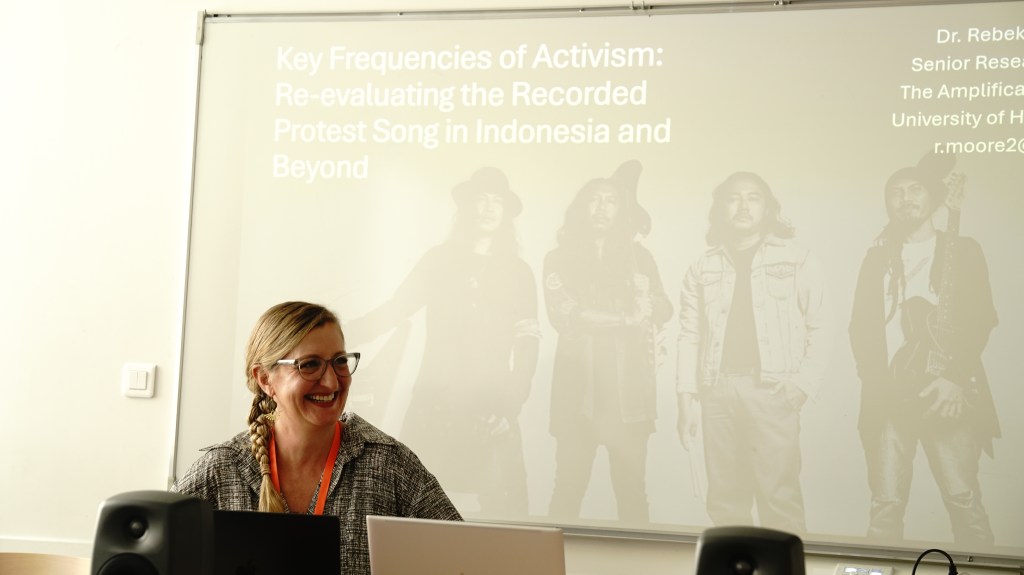
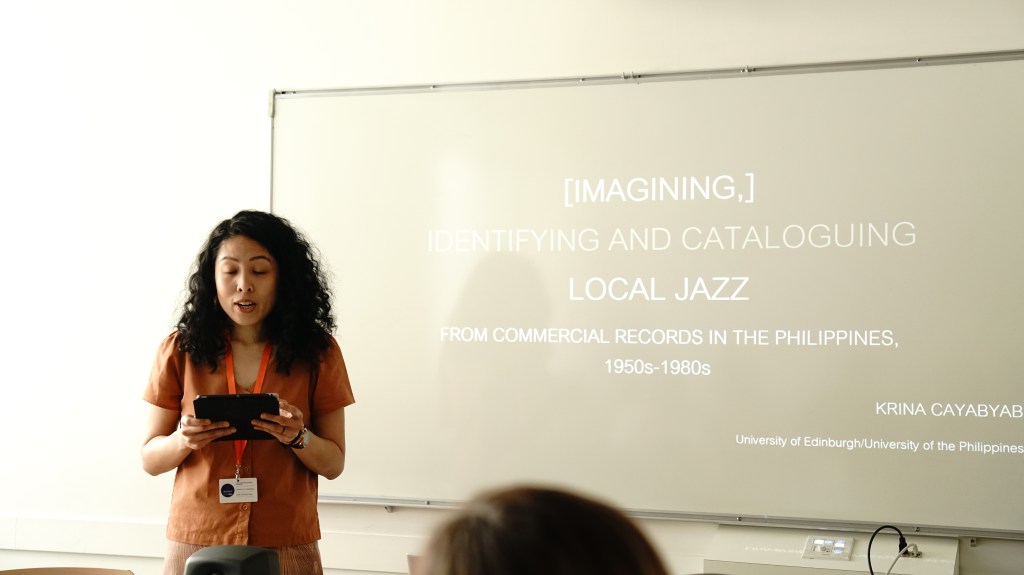
Importantly, we are happy to report that amidst such vibrant diversity, IASPM-SEA members were visibly present with three organised panels; the first focusing on popular music in the Philippines – Filipino Perspectives on Camaraderie in Evolving Popular Music Culture, Recorded Sound as Cinematic Text, and Posthuman Reflections on Manic and Raw Music Performance featured papers by Jose Buenconsejo, Crisancti Macaza and Lara Mendoza. The second panel, on Malaysian hip-hop/rap – Decentering Popular Music Studies: Transnational Flows and Global Agencies in Asia included two papers by Ch’ng Xing and Adil Johan, with Lara Mendoza appearing again as a panel discussant. The third on Indonesia and the Philippines – Resonant Frequencies: National Identity, Musical Memory, and Artistic Activism in Southeast Asia featured papers by Jeremy Wallach, Rebekah Moore and Krina Cayabyab.
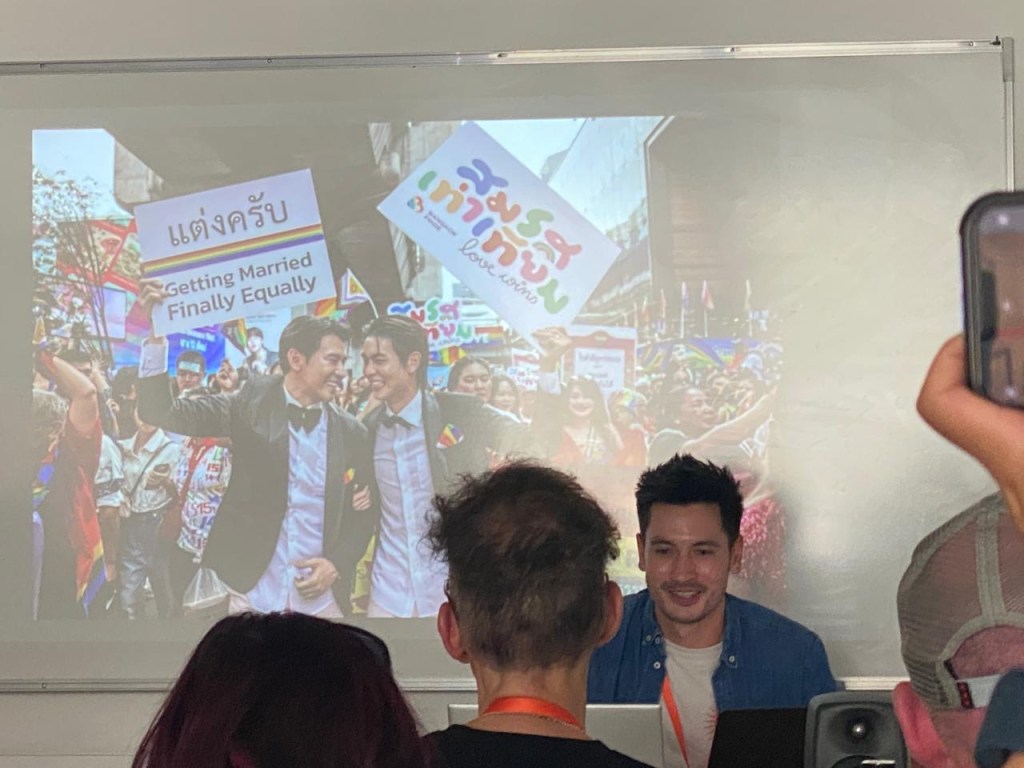
In addition, former participants from IASPM-SEA’s 2024 conference in Bangkok presented updated versions of their papers. Rory Fewer presented on the Queer EDM scene in Bangkok in his paper, “Malfunction as Queer Failure: The Anti-Telos of the Glitch” and Pascal Rudolph (alongside Martin Ulrich) presented “Recording Non-human Animals: Multispecies Music Memes as Popular Music”.
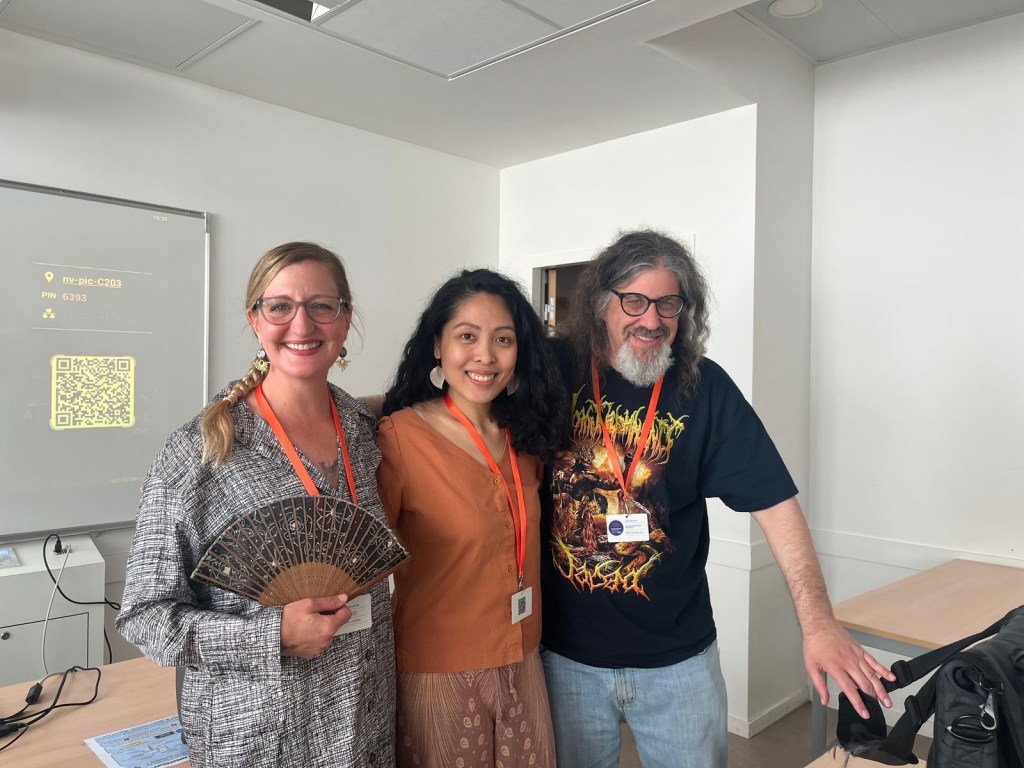
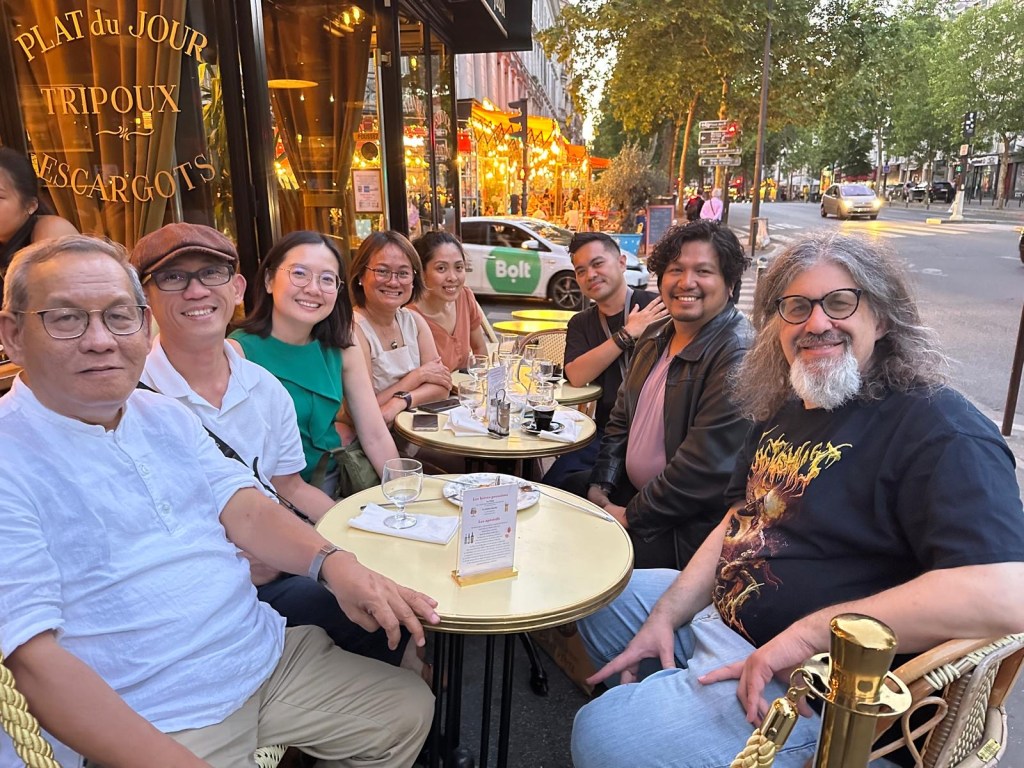
Camaredie clearly defined the relationships amongst the branch members and our friends from other IASPM branches. And beyond this, wider networks and solidarities were formed throughout the conference. Rebekah Moore’s recent appointment as Senior Research Research Fellow in Music for the Leverhulme funded Amplification Project at the University of Huddersfield (led by Steve Waksman), encouraged future collaboration between the project and IASPM-SEA members. We also formed connections with other popular music scholars with roots in or research interest in Southeast Asia. Sophia Santillan, a PhD candidate in University of Auckland, presented on “Spaces and Places in Aotearoa New Zealand K-pop Fandoms”. She was kind enough to help moderate Lara, Xin Ying and Adil’s panel. We hope that she can find a way to spend more time with IASPM-SEA and expand her ongoing thesis work to relate to Southeast Asia and her Filipino roots. We were also fortunate to connect with Pierre Prouteau, fresh off his postdoctoral project for the EU funded DeCoSEAS (Decolonizing Southeast Asian Sound Archives, 2021-2024) project. His expertise in Thai-Lao languages, social collectives and music sound systems in Thailand will be a welcome point of collaboration for future IASPM-SEA projects.
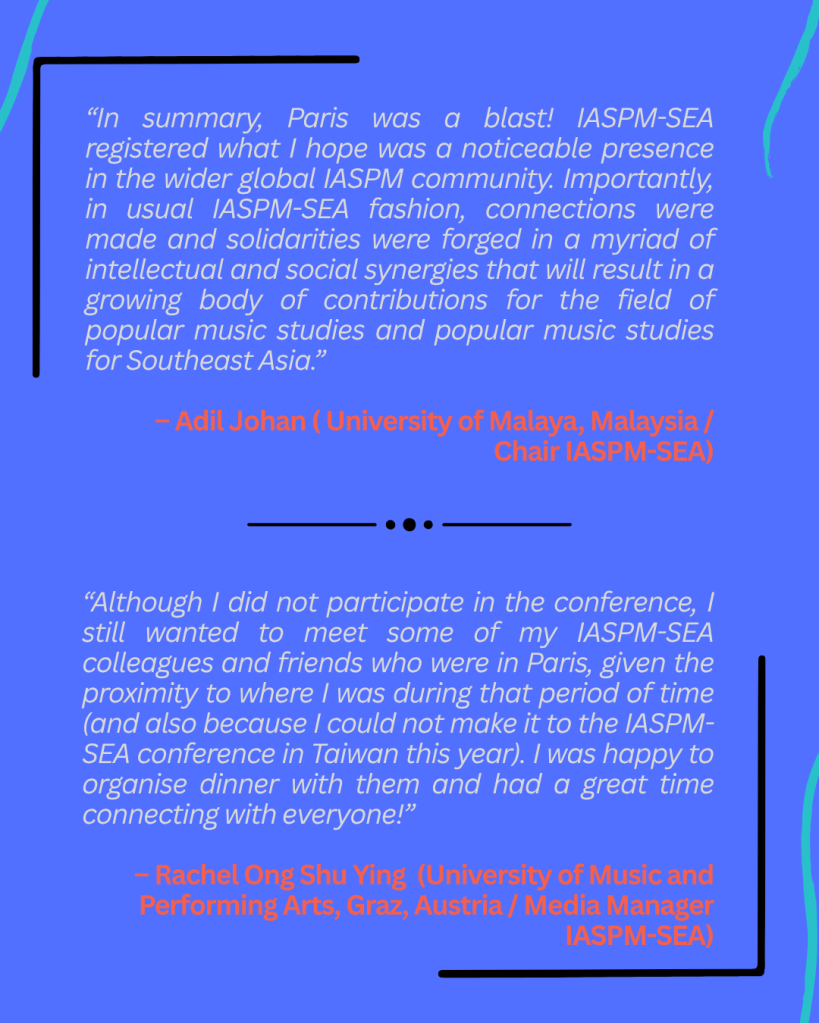
In summary, Paris was a blast! IASPM-SEA registered a noticeable presence in the wider global IASPM community. Importantly, in usual IASPM-SEA fashion, connections were made and solidarities were forged in a myriad of intellectual and social synergies that will result in a growing body of contributions for the field of popular music studies and popular music studies for Southeast Asia. At the same time, the complexities of postcoloniality, global cultural diversity and “North-South” power dynamics continue to frame the critical discourse and thought about what popular music, cultural and area studies must explore and unravel in our work as scholars and practitioners of and from our region – broadly and problematically defined. For the imagined borders that have given us reason to connect and belong are also fraught with tensions and contestations that need to be addressed.
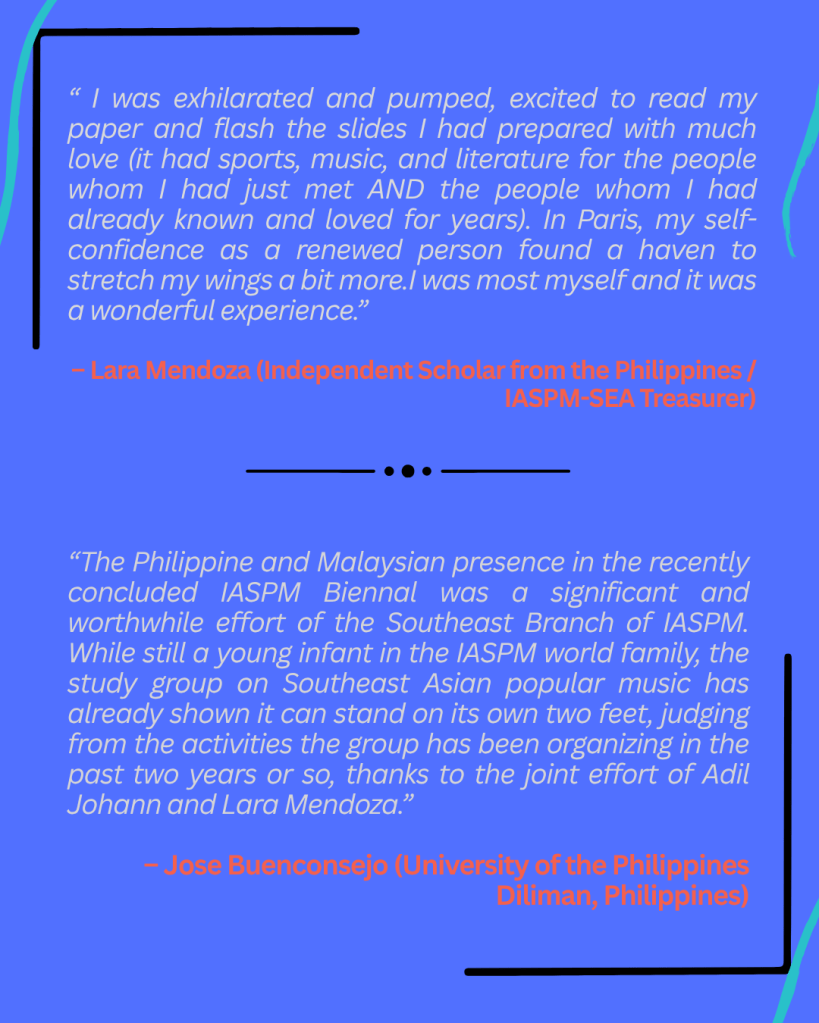
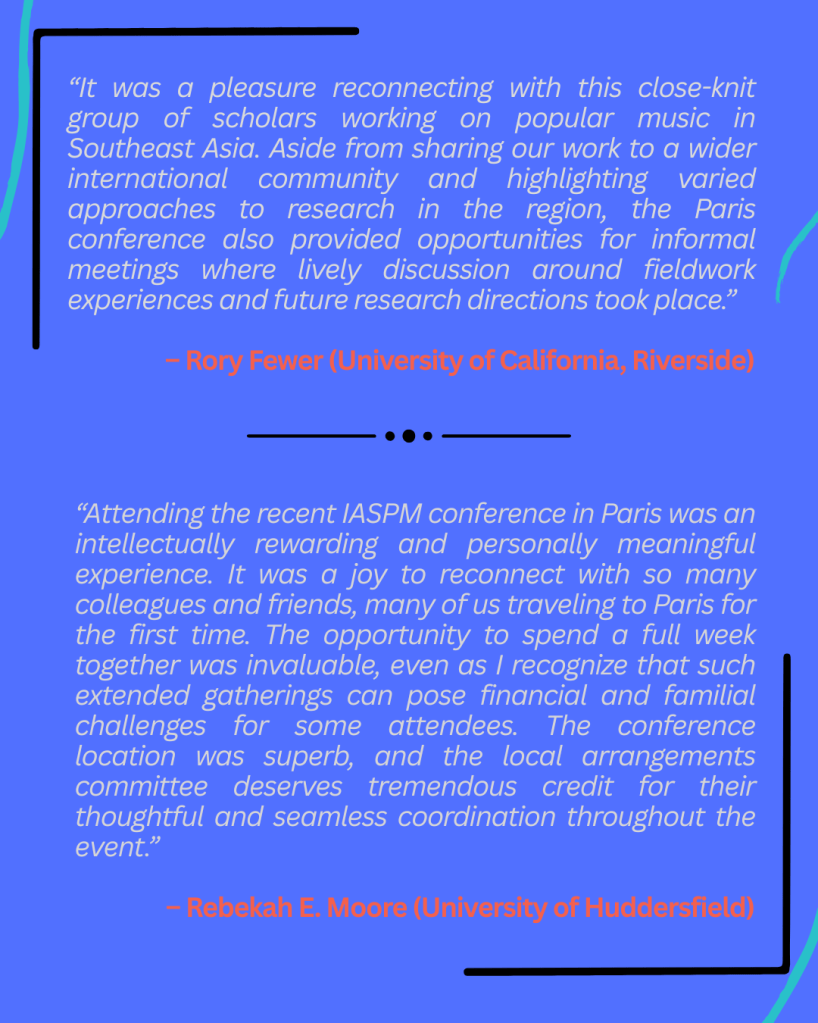
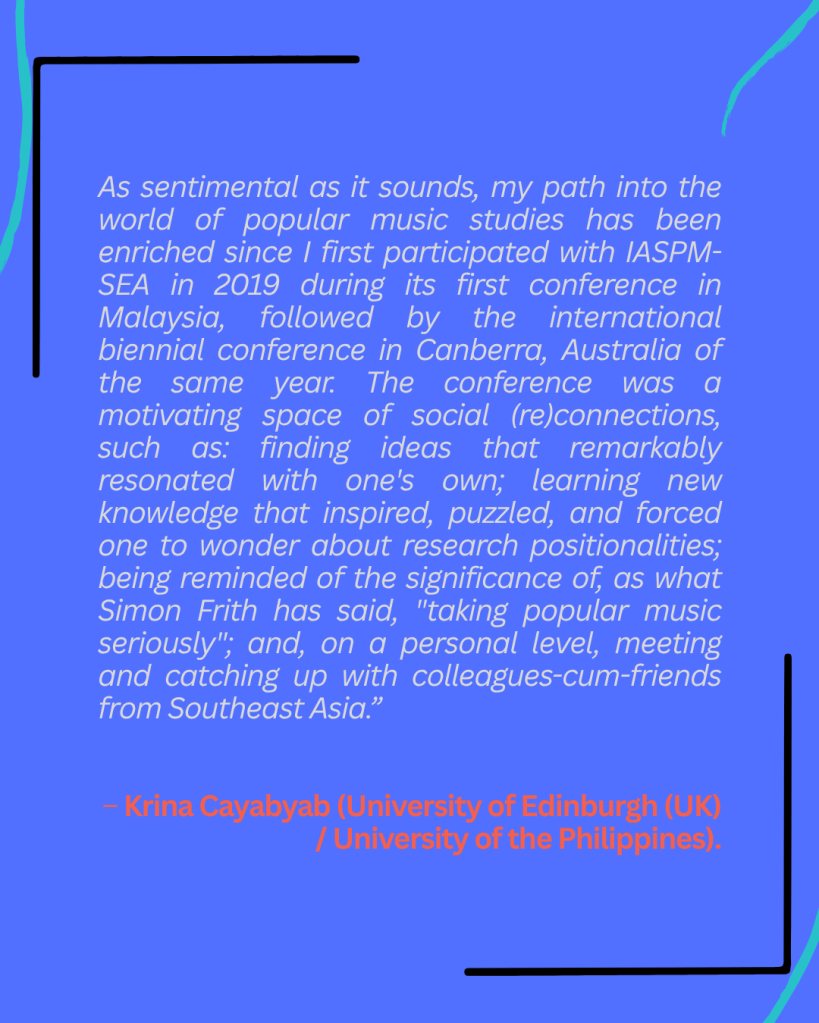
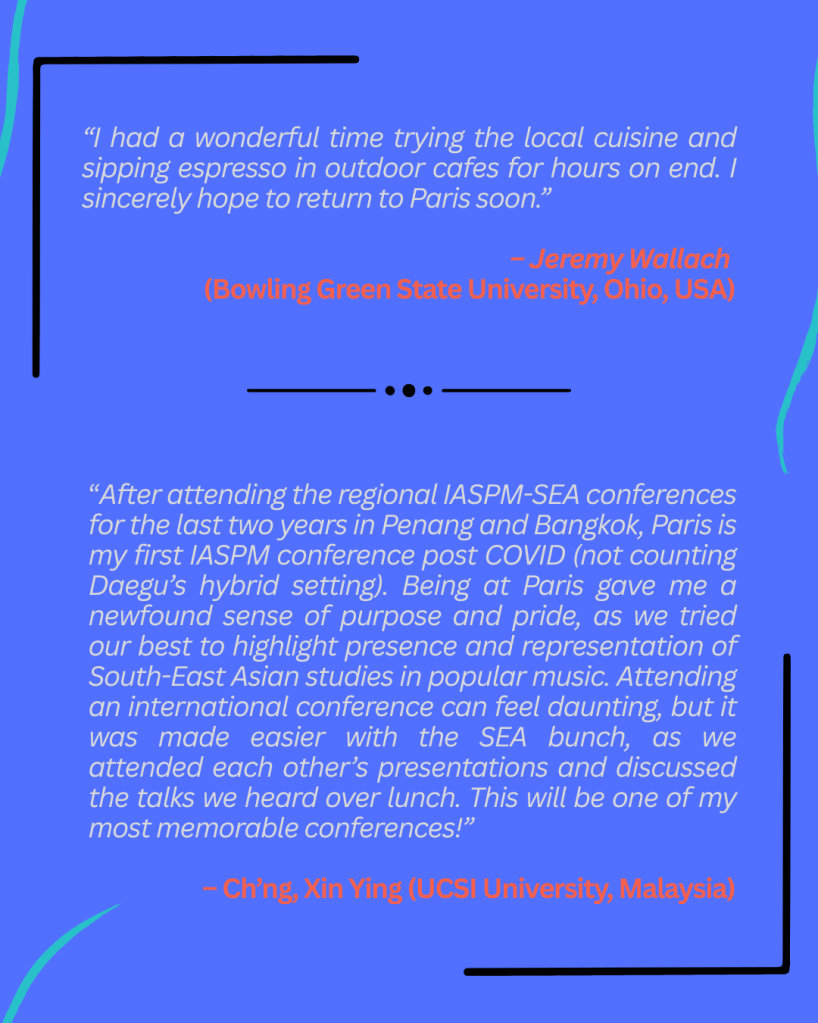
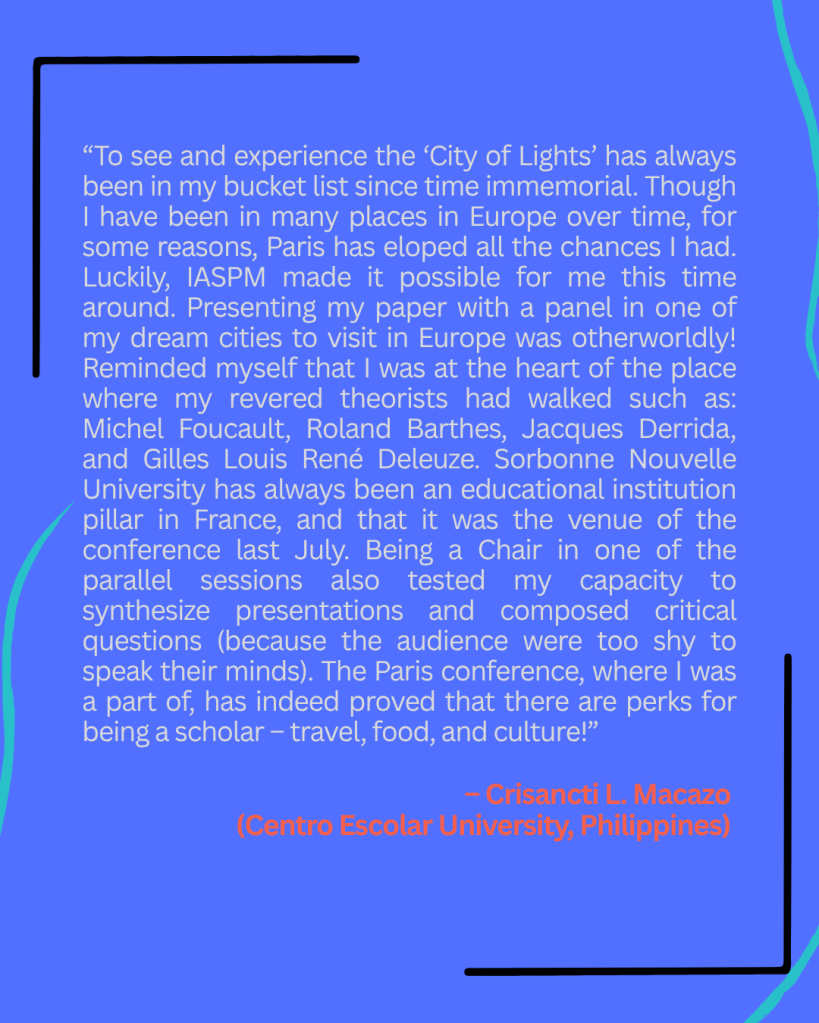
Reflections and experiences from members (swipe to read!)
*This report was written by Adil Johan and contributed collectively by IASPM-SEA members who were in Paris for the conference, compiled by Rachel Ong.*
 iaspm-sea.org
Leave a comment