
Conference Programme
Call for Papers
Human and More-than-Human Entanglements:
Popular Music Performance, Education, and Technologies
Organised by
International Association of Popular Music – Southeast Asia and
Inter-Asia Popular Music Studies Group
Hosted by
มหาวิทยาลัยราชภัฏบ้านสมเด็จเจ้าพระยา (Bansomdejchaopraya Rajabhat University)
Supported by
Center for Geological and Cultural Research for Sustainable Development (GSCR), Walailak University
Date
25-27 July 2024
Venue
Bansomdejchaopraya Rajabhat University
Currently, there is a wealth of research on how humans engage with each other in popular music. However, less has been explored in popular music studies regarding interactions with non-human or more-than-human entities. The more-than-human is understood as one that is both internally and externally experienced, with an emphasis on positionality within and beyond the human body. In music studies, explorations of the more-than-human can be observed in the growing interdisciplinary fields of musicology, ethnomusicology, ecomusicology and multispecies ethnography (Allen, 2013; Titon, 2013; Allen & Dawe, 2016) – especially that of indigenous sonic worlds, traditional music, and current discourses on virtual world(s). As such, this call poses the following query: How does Southeast Asian popular music directly deal with more-than-human relationships as a fundamental part of being in the world alongside producing and performing strategies of place-making and musicking?
This conference looks to explore tangential modes of how we relate to and situate ourselves in the world by considering the diverse aspects of popular music research. The theme proposes an examination of human and more-than-human sonic entanglements, their perception, adoption, and embodiment in cultures, practices, institutions and disciplines. This trajectory endeavours to facilitate holistic discussions around music’s interdisciplinary nature by introducing novel and contemporary approaches, solutions and questions that exist within and beyond Southeast Asia. Additionally, this conference aims to foster collaborative deliberations and conceptualisations among researchers to address such human and more-than-human entanglements through virtual, ethnographic, pedagogical, virtual and the numerous modalities that comprise the evolving field of popular music studies and beyond.
Points of reflection:
Sound and
Space
- How can we re-consider the concept of “sound” and “space”in musicking?
- How can we conceptualise entanglements of popular music in fluid, cross-border spaces (cities, regions, nation-states)?
- How can we consider sonic entanglements with issues in popular music (noise regulations, experimentation, aesthetics)?
- How can space (e.g. urban) build transformative awareness of musicians, and vice versa, how can this awareness transform the meaning of living space and identity?
Gender and Sexuality
- How do human and more-than-human intersections (e.g. online spaces, music technologies, AI) with gender and sexuality provide new insights for popular music studies?
- How does self-identification change the way we consume and perform music?
Technology
- How might synthesisers, digital effects, virtual instruments and streaming platforms relate to human and more-than-human interactions?
- How has AI altered the way we write, perform and listen to music?
Religion and Spirituality
- How have aspects of the divine and the spiritual intersected with the creation, production and performance of music?
- In what ways have religious beliefs, practice or legislation affected the production, performance and consumption of popular music?
Pedagogy
- How might music education be decolonised in Southeast Asia?
- What is (and will be) the impact of AI in music education?
Presentation formats and Submissions
- Individual Paper
- Organised Panel (3-4 papers)
- Roundtable (3-5 papers)
- Laboratory1 (5-8 participants)
- Poster Presentations
- Performance lectures, music workshops, films
- Other forms of creative outputs are welcome and will be considered.
Submit an abstract for a presentation in one of the above listed formats (between 200-250 words) along with a short biographical note (100 words). Organisers of panels and roundtables must submit a statement on the focus of the panel/roundtable along with an abstract from each presenter and their respective biographical notes.
Submissions have closed, thank you for your interest!
Please head to Conference Registration and Information for Attendees for more info about the conference!
Venue
Bansomdejchaopraya Rajabhat University is a non-profit, public university officially established in 2004. The university is named after Somdet Chao Phraya Borommaha Sri Suriyawong, who served as the regent during the early years of the reign of King Rama IX(1953-1910). It was established in 1896 as Ban Somdet Chao Phraya School and renamed to be a teacher training school as Wittaya Kru Bansomdej Chao Phraya in 1958, which is commonly known as “Bansomdej,” and it has had a famous music education program both in Thai classical and western music for decades. The university is located on the west side of the Chao Phraya River, which was once Thonburi province and is now part of Bangkok. Thonburi district remained less developed than the other side of the river. The old palace, temple, mosque, and church can still be found in an area nearby the university.
Organising Committee
Adil Johan. University of Malaya
Lara Katrina T. Mendoza. Ateneo de Manila University
Krina Cayabyab. University of Edinburgh / University of the Philippines
Hueyuen Choong. UCSI University
Local
Phakphoom Tiavongsuvan. College of Music, Bansomdejchaopraya Rajabhat University
Chaomanat Prapakdee. College of Music, Bansomdejchaopraya Rajabhat University
Ekachai Phuhiran. College of Music, Bansomdejchaopraya Rajabhat University
Kunthee Bunjukaew. Western Music Department, Phranakhon Si Ayutthaya Rajabhat University
Atchareeya Saisin. Faculty of Political Science and Public Administration, Chiang Mai University
Siriporn Somboonboorana. Faculty of Political Science and Public Administration, Walailak University
Viriya Sawangchot. Center of Geosocial and Cultural Research, Walailak University
Programme Committee
Chairs
Mayco Santaella. Sunway University
Adil Johan. University of Malaya
Members
Eva Tsai. National Taiwan Normal University
Jarrod Sim. Australian National University
Rachel Ong Shu Ying. University of Music and Performing Arts Graz / KUG
Jose R. Taton Jr. University of the Philippines Visayas
Laboratories are closed meetings for participants to develop a cohesive interdisciplinary research output (e.g. publications, teaching plans, workshops). Laboratories run for half a day and consist of a moderator and five to eight participants. During a dedicated session of the conference, moderators will present the findings of the laboratory sessions to a larger audience. PLEASE CONTACT US AT iaspm.sea.conference@gmail.com BEFORE SUBMITTING AN ABSTRACT. ↩︎
Information for Attendees
Venue
The IASPM-SEA 2024 conference will be held at Bansomdejchaopraya Rajabhat University College of Music (BSRU) in Bangkok, Thailand. Emerging as a leading institution for Music Education degrees since 2004, the BSRU College of Music launched its International Music program in 2007 with eight core courses: Composition, Classical Music, Marching Music, Jazz, Music Technology, Popular Music, Musicology, and Music Education. In 2016, the Popular Music Department of the college was established. With the vision of developing a creative arts city and the local popular music industry, the BSRU College of Music has actively been engaging with Thai and international industry professionals.
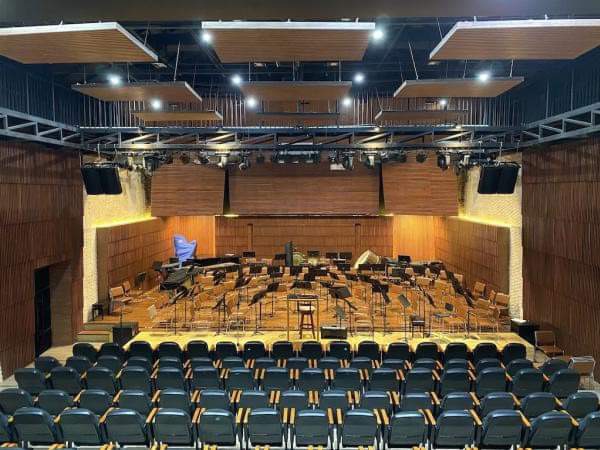

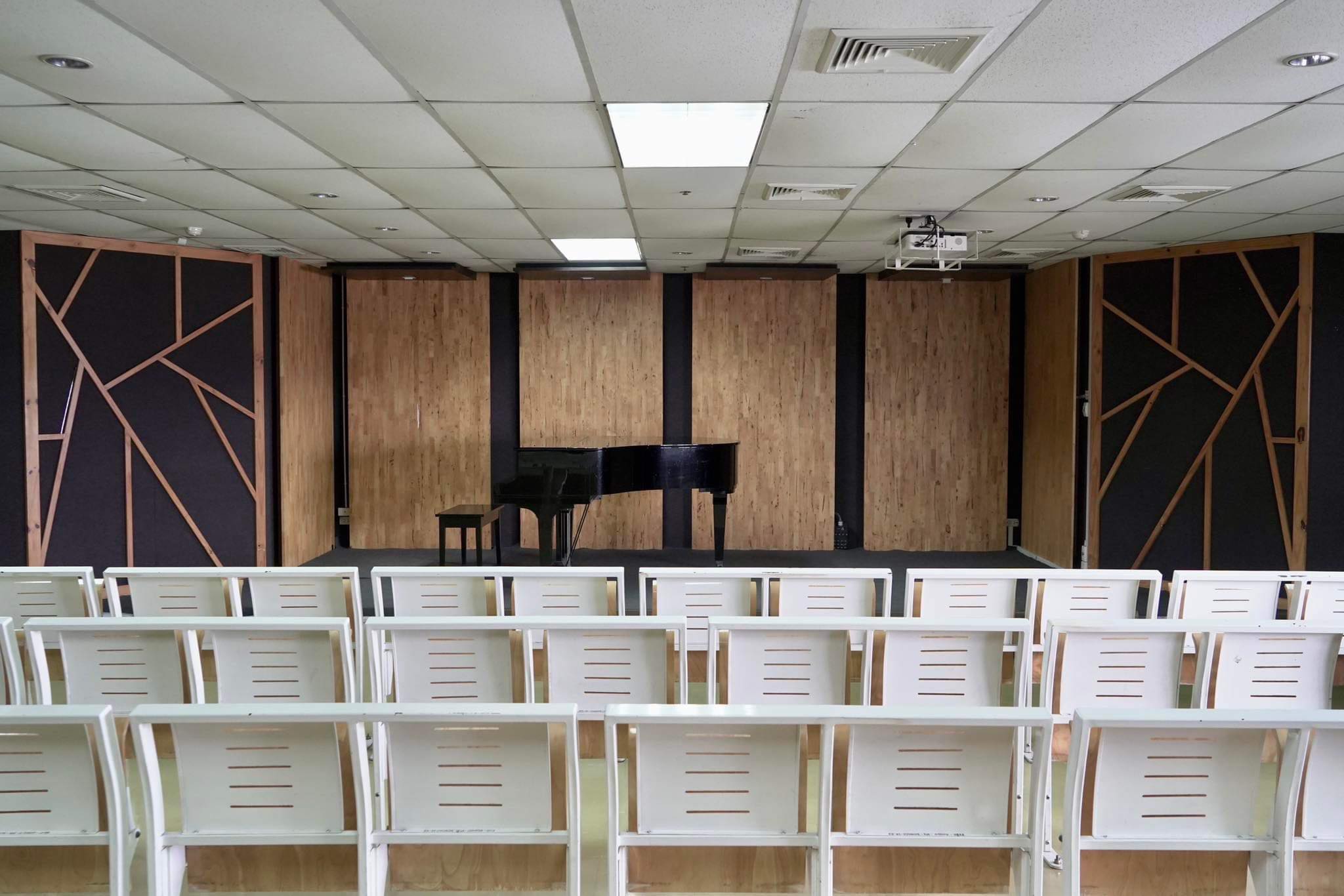
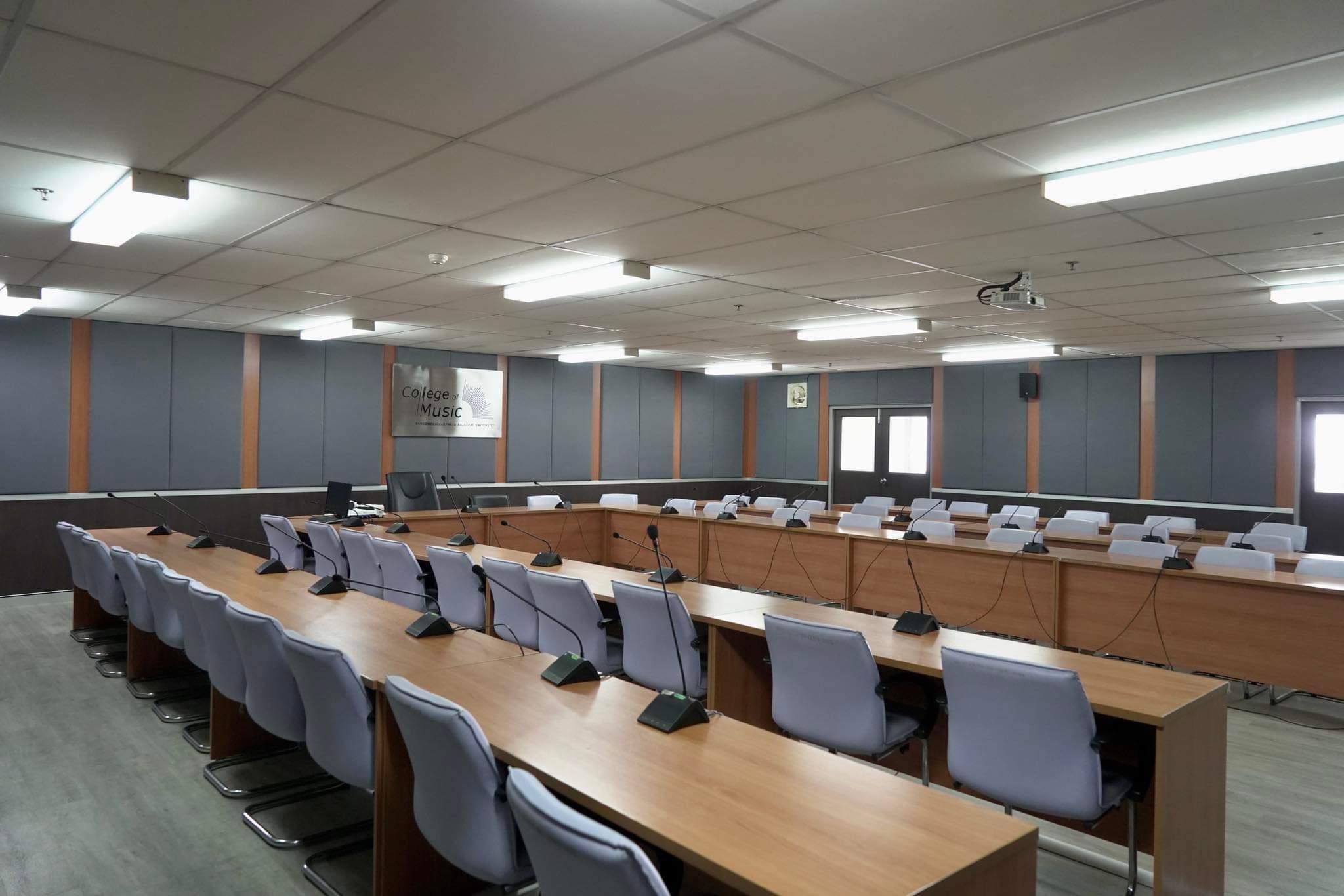
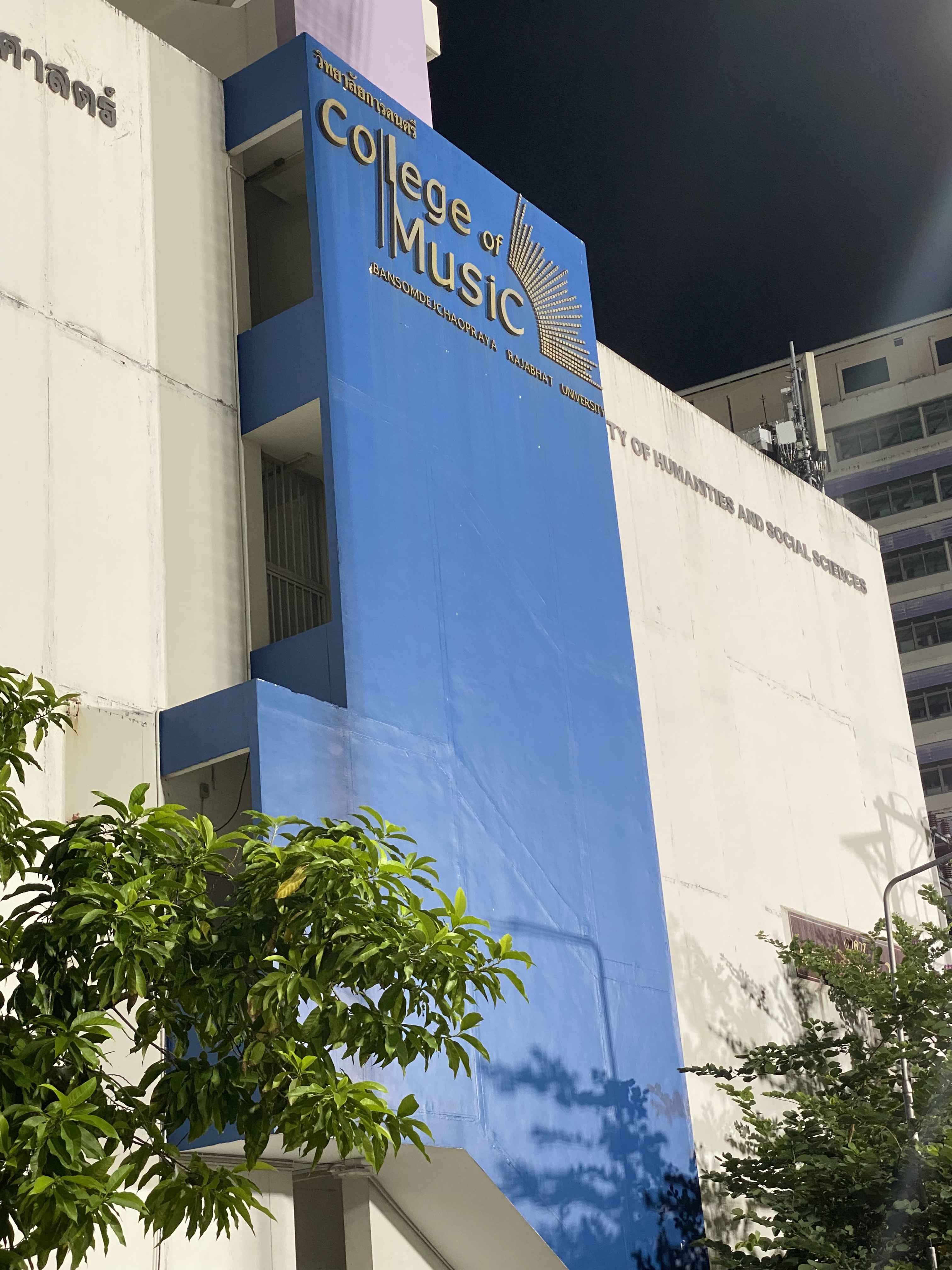
The Bansomdejchaopraya Rajabhat University, a non-profit public university officially established in 1996, is named after Somdet Chao Phraya Borommaha Sri Suriyawong, a high-ranking official in the 19th century who was crucial in the development and modernization of Siam during the reign of King Rama.
Located on the west bank of Thailand’s principal waterway Chao Phraya River, the BSRU is surrounded by Thonburi District’s historical sites including Wat Arun Ratchawararam Ratchawaramahawihan, the National Museum of Royal Barges, the Bangkok Noi Railway Station, Wat Prayurawongsawat Worawihan (Grand Palace) ICONSIAM (ICONSIAM) Khaosan Road (Khaosan Road) and the Memorial Bridge. Furthermore, Thonburi is known for its traditional Thai Culture, historical temples and architectural sites, and the local market such as the Khlong San Market and the Pak Khlong Talat (Flower Market).
When it comes to Bangkok’s music scene, the capital is known for its diverse music festivals all year round, exciting nightlife, and regular international concerts.
The conference address is at Bansomdejchaopraya Rajabhat University College of Music (BSRU), 1061 Soi Itsaraphap 15, Hiran Ruchi Subdistrict, Thonburi District, Bangkok 10600.
Transportation
One of Thailand’s main international airports is Suvarnabhumi Airport, with the IATA code BKK. Below is a travel recommendation from Suvarnabhumi Airport to BSRU:
When taking the Airport Rail Link to Phetchaburi Station, change your journey via MRT (Metropolitan Rapid Transit) at Phetchaburi Station. Proceed to Itsaraphap Station and take Exit 1. You can then take a taxi or bus number 149, 177, 208, 40, 56, or 57 for BSRU.
If arriving at another major airport, Donmueang International Airport with IATA code DMK, below are the recommended directions travelling to BSRU:
It takes about 45 minutes via taxi or the Bus Line A1 to the MRT Suan Chatuchak (Jatujak) station. From there, take the MRT Chatuchak Park Station to Itsaraphap Station and proceed to Exit 1. You can then take a taxi or bus number 149, 177, 208, 40, 56, or 57 for BSRU.Traffic congestion is common in Bangkok, so kindly factor in an additional 30 minutes for potential delays caused by traffic congestion when travelling to the venue.
Accommodation
Thonburi District offers a wide range of accommodation from upmarket resorts, hotels, service apartment suites to modest shared-room hostels. Participants must book and pay for their own accommodation.
Hotels in the Vicinity
- Kasayapi Hotel
- The Hog
- 51 Suanplu Residence
- Achcha Family Hotel
- Inn Trog And Inn Soi
- Millenium Hilton Bangkok
Bookings can easily be made through Agoda.com, Booking.com, Traveloka.com and other websites which usually offer cheaper rates than standard hotel quotations.
Please note that there is a multitude of options for accommodation in Bangkok, but prices and availability will vary depending on the date of booking.
We advise participants to be mindful of the location of their selected accommodation in relation to the conference venue. The suggested hotels above are the closest and most conveniently located near the conference venue.
Health
Latest Thailand Entry
The Thai government has lifted its COVID-related health restrictions on 1 July 2022. All visitors do not need to show proof of COVID insurance; the Thailand Pass is not required anymore; and proof of vaccination won’t be necessary upon entry. However, Thai immigration and Airlines may randomly check travelers to confirm that COVID prevention requirements are met.
For any health concerns, the following hospitals are in the vicinity of the BSRU College of Music:
Somdech Praya Pinklao Hospital
Thonburi Hospital
Taksin Hospital
Nan Ah Hospital
Siriraj Hospital
Samitivej Thonburi Hospital
 iaspm-sea.org